


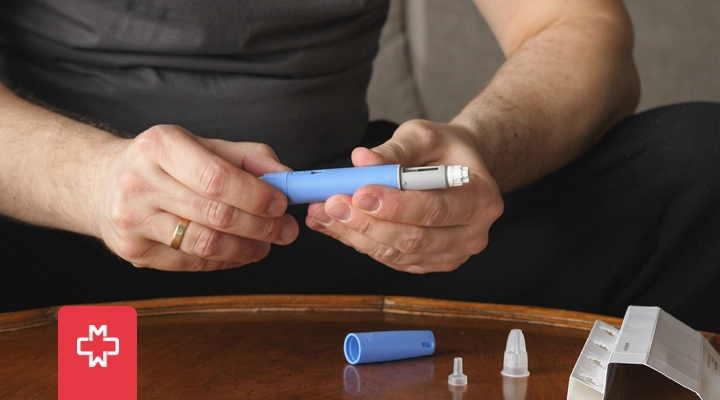
The approved Ozempic injection sites are the abdomen, thigh, and upper arm, and current prescribing information shows similar semaglutide exposure from all three locations. No injection site has been established as producing greater weight loss. The best site is one you can use correctly, rotate, and keep free of irritated or damaged skin. DailyMed
If you are using Ozempic and wondering where to give your weekly injection, you have three approved areas to choose from: the abdomen, thigh, or upper arm. The medication goes into the layer of tissue under the skin, not into a muscle or vein. Ozempic
The injection site can affect comfort and convenience, but current prescribing information does not show a preferred site for greater semaglutide exposure. Your weekly routine, injection technique, and site rotation matter more than choosing one body area over another. DailyMed
Does the Ozempic Injection Site Affect Weight Loss?
No injection site has been shown to produce better weight loss.
The current Ozempic prescribing information reports similar exposure to semaglutide when it is injected under the skin of the abdomen, thigh, or upper arm. That means the location does not provide a documented advantage in how much semaglutide reaches the body. DailyMed
This is different from saying that every person will lose exactly the same amount of weight from every injection site. Weight change depends on factors such as the medication prescribed, dose, medical history, diet, activity, and the person’s response to semaglutide.
For patients receiving care for type 2 diabetes, Ozempic is an FDA-approved medication used with diet and exercise to improve blood glucose control. Its current U.S. label also includes certain cardiovascular and kidney risk-reduction indications. DailyMed
Ozempic vs. Wegovy for Weight Loss
Ozempic and Wegovy both contain semaglutide, but they do not have the same FDA-approved indications.
Current FDA information lists Wegovy for reducing excess body weight and maintaining weight reduction long term in adults with obesity and adults with overweight who have at least one weight-related condition. FDA Access Data
Ozempic’s current approved uses center on type 2 diabetes and certain cardiovascular and kidney risk reductions in adults with type 2 diabetes. Weight loss is not listed as an Ozempic indication. DailyMed
Some clinicians may prescribe medications for uses outside their FDA-approved indication. If your prescription is for weight management, ask your prescribing clinician which semaglutide product and dose are appropriate for you.
You can also review Manhattan Medical Arts’ weight loss injection care to learn how prescription weight-management options may fit into medical care.
Where Can You Inject Ozempic?
Ozempic can be injected under the skin in three body areas:
- Abdomen
- Thigh
- Upper arm
The current manufacturer instructions state that the upper arm should be used with help from another person when using the Ozempic pen. The abdomen and thigh are easier for many people to reach without assistance. DailyMed
| Injection site | What to know |
|---|---|
| Abdomen | Easy to reach and provides several spots for rotation |
| Thigh | Another approved site that many people can reach themselves |
| Upper arm | Approved site, but the back of the upper arm may require assistance |
Where to Inject Ozempic in the Abdomen
The abdomen is one of the approved Ozempic injection areas.
The official instructions place the injection at least 2 inches from the belly button. Choose an area with healthy tissue and avoid skin that is sore, bruised, scarred, hard, red, or irritated. DailyMed
You do not need to switch from your abdomen to another body area every week. If you continue using the abdomen, use a different spot each time.
A simple abdomen rotation can use:
- Upper right abdomen
- Lower right abdomen
- Lower left abdomen
- Upper left abdomen
The goal is to avoid injecting into the exact same location repeatedly.
Where to Inject Ozempic in the Thigh
The thigh is another approved injection area.
Choose the area directed by your healthcare professional and use healthy tissue under the skin. The thigh can be useful for people who prefer to sit while giving the injection or who find the abdomen uncomfortable.
Avoid injecting into areas that are:
- Bruised
- Tender
- Red
- Swollen
- Scarred
- Hard or lumpy
If you have a question about where your prescribed device should be placed on the thigh, ask your healthcare professional to show you the location before your first self-injection.
Where to Inject Ozempic in the Upper Arm
The upper arm is an approved injection area, but it can be harder to reach correctly when you are injecting yourself.
The current Ozempic instructions identify the back of the upper arm as an injection location and state that another person should help with this area when using the pen. DailyMed
Do not stretch or twist your body in a way that makes it difficult to control the pen. If you cannot clearly reach the correct area, ask another trained person or your healthcare professional for assistance.
Which Ozempic Injection Site Is Best for You?
There is no FDA-designated injection site that produces better weight loss.
The practical choice can depend on:
How easy the site is to reach:
The abdomen and thigh may be easier for self-injection.
How comfortable the site feels:
A person may prefer one approved area because it feels more comfortable.
Whether the skin is healthy:
Do not inject into irritated, bruised, swollen, scarred, or lumpy areas.
Whether you can rotate spots:
You should be able to move to another spot with each injection.
Whether you need assistance:
The upper arm may be harder to reach without help.
Your healthcare professional can show you the appropriate location for your body and your specific device.
Abdomen vs. Thigh vs. Upper Arm
The current Ozempic label reports similar semaglutide exposure from subcutaneous injections in the abdomen, thigh, and upper arm. DailyMed
That means the choice can focus on access, comfort, and proper injection technique rather than trying to find a body area that produces more weight loss.
Is the Abdomen Better Than the Thigh?
There is no documented weight-loss advantage for the abdomen. It may simply be easier for some people to reach and rotate.
Is the Thigh Better Than the Stomach?
There is no established weight-loss advantage for the thigh. It is an approved alternative when the area is comfortable and suitable for injection.
Is the Upper Arm Better for Weight Loss?
No. The upper arm is an approved injection location, but it has not been shown to provide greater weight loss.
Does the Injection Site Change How Ozempic Works?
Current prescribing information reports similar semaglutide exposure from the three approved sites. DailyMed
How to Rotate Ozempic Injection Sites
You do not need to switch between the abdomen, thigh, and upper arm every week.
The manufacturer says to change the injection site with each injection. If you use the same body region, choose a different spot within that region. Ozempic
For an abdomen-only routine, you could move between four different areas rather than repeatedly using one spot.
Rotation helps avoid repeated injections into the same piece of tissue.
Do not inject into a lump, sore area, bruise, scar, or irritated skin.
How to Inject Ozempic Correctly
Your healthcare professional should show you how to use the Ozempic pen before your first injection. Follow the instructions supplied with your prescription and device. DailyMed
Check the Medication
Inspect the medication before use. The Ozempic solution should be clear and colorless. Do not use it if you see particles or a change in appearance. DailyMed
Use a New Needle
Use a new needle for each injection. Never share your Ozempic pen with another person, even if the needle has been changed. FDA Access Data
Prepare the Injection Area
Choose an approved site with healthy skin. Clean the area as directed and allow it to dry.
Give the Injection Under the Skin
Ozempic is a subcutaneous injection. Do not inject it into a muscle or vein. Ozempic
Hold the Dose Button
With the Ozempic pen, press and hold the dose button after inserting the needle. When the dose counter reaches zero, slowly count to six before removing the needle. Ozempic
Dispose of the Needle
Remove the needle after the injection and place it in an appropriate sharps container. Follow local rules for sharps disposal.
Ozempic Pen vs. Prefilled Syringe
Do not combine instructions from different semaglutide devices.
The current Ozempic labeling contains device-specific instructions. The pen and prefilled syringe instructions are not identical. For the prefilled syringe instructions, the label describes pinching a fold of skin and inserting the needle at a 45-degree angle. DailyMed
The Ozempic pen instructions use a different process.
This is why you should follow the instructions for the exact device prescribed to you rather than choosing an injection angle based only on body size or how much body fat you have.
Where Not to Inject Ozempic
Do not inject Ozempic:
- Into a muscle
- Into a vein
- Into irritated skin
- Into a bruise
- Into a scar
- Into a swollen area
- Into a hard or lumpy area
- Into the exact same spot repeatedly
Ozempic is intended for subcutaneous injection in the abdomen, thigh, or upper arm. DailyMed
What Happens If You Inject Ozempic Incorrectly?
What happens depends on the mistake.
If you inject into muscle or a vein, contact your healthcare professional for guidance.
If you inject into irritated or damaged skin, avoid using that area again until you have received appropriate guidance.
If the medication leaks or you are unsure whether the full dose was delivered, do not automatically give another dose. Contact your prescribing clinician or pharmacist for instructions.
The manufacturer advises keeping the dose button pressed until the dose counter reaches zero and then counting to six before removing the needle. Ozempic
What Causes a Lump After an Ozempic Injection?
A small lump, redness, or discomfort can occur after an injection. Injection-site reactions were reported in clinical trials, though they occurred in a small percentage of Ozempic-treated patients. DailyMed
Repeated injections into the same spot can also cause changes in the fatty tissue, including lipohypertrophy.
If you develop a persistent lump, avoid repeatedly using that location and ask your healthcare professional to examine it.
Can the Injection Site Affect Ozempic Nausea?
Changing from the abdomen to the thigh is not a proven way to prevent nausea.
Nausea is a systemic side effect rather than a local injection-site problem. The current Ozempic label lists nausea, vomiting, diarrhea, abdominal pain, and constipation among the most common adverse reactions. DailyMed
If nausea is persistent, severe, or interfering with eating and drinking, contact your prescribing clinician.
If fatigue is your main concern while using Ozempic, you can also read Does Ozempic Make You Tired? for information about possible causes and when medical evaluation may be needed.
What If Ozempic Leaks After the Injection?
A small drop from the needle can occur during preparation and does not necessarily mean the dose was lost. The manufacturer instructions say to continue with the injection after seeing a drop from the needle tip during preparation. DailyMed
If medication leaks out after you have started or completed the injection and you are unsure whether the full dose entered your body, do not repeat the dose on your own. Contact your healthcare professional or pharmacist.
Can You Inject Ozempic and Insulin in the Same Area?
Yes. Ozempic and insulin can be injected in the same general body region, but they should be given as separate injections and should not be placed immediately next to each other. They should never be mixed in the same injection. DailyMed
What If You Miss Your Ozempic Dose?
The current prescribing information says to take a missed Ozempic dose as soon as possible within 5 days. If more than 5 days have passed, skip that dose and take the next dose on the regular weekly day. Do not double the next dose. DailyMed
The weekly injection day can also be changed when at least 48 hours have passed since the previous dose. DailyMed
What About Compounded Semaglutide?
Compounded semaglutide is not the same thing as an Ozempic pen.
FDA has reported dosing errors with compounded injectable semaglutide, including errors linked to different concentrations and confusion between milligrams, milliliters, and “units.” Some reported cases required medical care or hospitalization. U.S. Food and Drug Administration
If you receive semaglutide from a compounding pharmacy, use the syringe, concentration, dose, and instructions supplied for that prescription. Do not copy an Ozempic pen dose or injection process onto a compounded vial.
When Should You Contact Your Healthcare Provider?
Contact your healthcare professional if:
- You are unsure where to inject
- You cannot reach an approved injection site
- You repeatedly have injection problems
- A lump or skin reaction persists
- You think you injected the medication incorrectly
- You are unsure whether you received the full dose
- You have severe or persistent vomiting
- You develop severe abdominal pain
- You have signs of a serious allergic reaction
Ozempic’s current labeling contains warnings for serious allergic reactions, pancreatitis, gallbladder disease, severe gastrointestinal reactions, kidney problems related to volume depletion, and other conditions. DailyMed
How Manhattan Medical Arts Can Help
Choosing an injection site is only one part of safe prescription medication use. At Manhattan Medical Arts, a clinician can review your medical history, current medications, weight-management goals, and response to semaglutide.
You can learn more about the Ozempic program at Manhattan Medical Arts or review the clinic’s weight loss injection services.
Dr. Syra Hanif, M.D., a board-certified primary care physician, can help patients understand prescription medication options, injection concerns, side effects, and follow-up needs. You can learn more about Dr. Syra Hanif and her medical background.
Frequently Asked Questions
Where is the best place to inject Ozempic for weight loss?
There is no approved site shown to produce greater weight loss. Ozempic can be injected into the abdomen, thigh, or upper arm. Choose a site you can use correctly and rotate.
Does it matter where you inject Ozempic?
The location does not appear to change semaglutide exposure among the approved sites. Comfort, access, healthy skin, and proper rotation are practical factors when choosing a site.
Is Ozempic better in the stomach or thigh?
Neither site has a documented weight-loss advantage. Both are approved injection areas. Your choice can depend on comfort, reach, skin condition, and your ability to rotate injection spots.
Can I inject Ozempic in my thigh?
Yes. The thigh is one of the approved subcutaneous injection sites for Ozempic. Follow the device instructions provided by your healthcare professional.
Can I inject Ozempic in my upper arm myself?
The manufacturer instructions identify the back of the upper arm as an injection area and recommend assistance from another person when using the pen.
How far from the belly button should I inject Ozempic?
For abdominal injections, the manufacturer instructions say to use an area at least 2 inches from the belly button.
Can I use the same Ozempic injection area every week?
You can use the same general body region, but use a different spot each time. Do not repeatedly inject into the exact same location.
What happens if I inject Ozempic too deep?
Ozempic is intended for subcutaneous injection, not muscle or vein injection. If you think you injected it incorrectly, contact your healthcare professional for guidance.
Can changing the injection site help Ozempic nausea?
There is no evidence that moving an injection from the abdomen to the thigh prevents nausea. Nausea is a systemic medication effect, not simply a local injection-site reaction.
What happens if Ozempic leaks after injection?
Do not automatically repeat the dose. If you think some medication leaked after administration and you are unsure whether the full dose was delivered, contact your healthcare professional or pharmacist.
Disclaimer
This blog is for informational & educational purposes only and does not intend to substitute any professional medical advice or consultation. For any health-related concerns, please consult with your physician, or call 911.

-
About The Author
Dr. Syra Hanif M.D.Board Certified Primary Care Physician

Dr. Syra Hanif is a board-certified Primary Care Physician (PCP) dedicated to providing compassionate, patient-centered healthcare.
Read More