


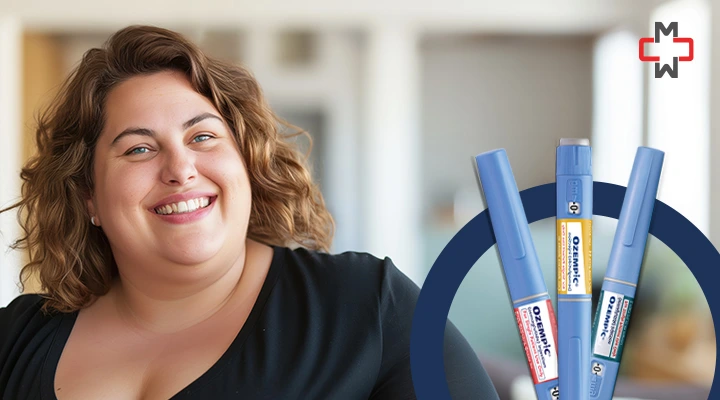
“Ozempic face” is a nonmedical term used to describe facial volume loss, hollowing, loose skin, and more visible wrinkles that may become noticeable after significant weight loss while taking Ozempic or other GLP-1-based medications. It is not a formal medical diagnosis or a listed Ozempic adverse reaction, and similar facial changes can occur after substantial weight loss from other causes. (WebMD)
The changes may affect the cheeks, temples, under-eye area, jawline, and neck. They are thought to result primarily from loss of facial fat and structural support as body weight decreases. Newer research is also investigating whether GLP-1 receptor agonists influence skin and adipose-tissue biology in ways that could contribute to changes in skin quality, but these possible direct effects are not yet fully established. (PubMed)
At Manhattan Medical Arts, patients using GLP-1 medications can receive physician-supervised weight-management care, while concerns about post-weight-loss facial changes can be evaluated separately based on whether the main issue is volume loss, skin laxity, or skin quality. Weight Management at Manhattan Medical Arts
Is Ozempic Face a Real Medical Condition?
Ozempic face describes a real change in facial appearance that some people notice after substantial weight loss, but “Ozempic face” itself is not a formal medical diagnosis.
The term became popular as medications such as semaglutide produced substantial weight loss in some patients. WebMD describes it as a colloquial term for facial hollowing, wrinkles, sunken areas, and loose skin after weight loss, while Cleveland Clinic similarly defines it as facial volume loss associated with rapid weight reduction. (WebMD)
It is also important not to describe Ozempic face as an established common adverse reaction to Ozempic. The current U.S. prescribing information lists nausea, vomiting, diarrhea, abdominal pain, and constipation as the most common adverse reactions occurring in at least 5% of Ozempic-treated patients. “Ozempic face” is not included as a listed adverse reaction. (DailyMed)
That distinction gives us a more accurate way to think about the term:
Ozempic treatment may contribute to substantial weight loss → facial fat may decrease with overall body fat → facial contours may become more hollow or lax.
Is Ozempic Actually a Weight-Loss Medication?
Ozempic contains semaglutide, a GLP-1 receptor agonist. In the United States, Ozempic is FDA-approved for type 2 diabetes and specific cardiovascular and kidney-risk indications. Its current U.S. prescribing information does not list chronic weight management as an approved Ozempic indication. (DailyMed)
Ozempic can nevertheless lead to weight loss and may be prescribed off-label for weight management when a clinician determines that use is appropriate.
Wegovy also contains semaglutide but has different FDA-approved indications. Current Wegovy labeling specifically includes long-term reduction and maintenance of excess body weight in qualifying adults and adolescents. (DailyMed)
Manhattan Medical Arts also explains on its Ozempic service page that Ozempic is FDA-approved for type 2 diabetes and may be used off-label for weight loss. Ozempic at Manhattan Medical Arts
This distinction matters because the phrase “Ozempic face” does not mean the facial change is unique to Ozempic.
What Does Ozempic Face Look Like?
Ozempic face does not have one standardized appearance. Facial changes depend on the amount of weight lost, baseline facial anatomy, age, skin quality, and where an individual naturally stores facial fat.
| Facial Area | Possible Change After Significant Weight Loss |
|---|---|
| Temples | More hollow or concave appearance |
| Under-eye area | Greater hollowing or shadowing |
| Cheeks | Loss of fullness or flatter midface |
| Nasolabial folds | Folds may become more noticeable as cheek support decreases |
| Lower face | Increased jowling or less defined contours |
| Jawline | Reduced soft-tissue support may make laxity more visible |
| Neck | Loose or redundant skin may become more noticeable |
| Overall face | A slimmer, more angular, hollow, or older-appearing contour |
Recent reviews of GLP-1-associated facial changes describe loss of facial volume, dermal thinning, reduced elasticity, wrinkles, and redundant or sagging skin as recurring features reported after substantial medication-associated weight loss. (PubMed)
The face becoming slimmer after weight loss is not automatically abnormal. “Ozempic face” generally refers to situations where the reduction in volume or increase in laxity becomes noticeable enough to create a gaunt, hollow, or prematurely aged appearance.
Why Does Ozempic Face Happen?
The best-supported explanation is loss of facial fat during substantial overall weight reduction.
Facial appearance depends partly on multiple superficial and deeper fat compartments that provide volume and support to the skin. When a person loses a considerable amount of body fat, facial fat can decrease as well.
Facial Fat Loss
Fat in the cheeks, temples, and other facial compartments helps maintain facial contours. Losing that volume can make the cheekbones, orbital area, folds, and jawline more prominent.
Cleveland Clinic explains that rapid weight loss can reduce facial fat and leave the face looking more hollow, with sunken cheeks, wrinkles, and loose skin. (Cleveland Clinic)
Reduced Structural Support
The skin sits over underlying fat, muscle, ligaments, and bone.
When facial fat decreases, the skin has less volume beneath it. Folds and jowls that were previously less visible can therefore become more noticeable.
This is why facial hollowing and skin sagging are related but are not the same problem.
Skin Elasticity and Age
Younger skin generally has greater capacity to adapt to changing facial volume than skin with reduced elasticity.
A 2026 review of GLP-1-associated skin changes identified older age and rapid weight loss among factors associated with more noticeable dermatologic changes. (PubMed)
Sun exposure, smoking history, genetics, baseline facial anatomy, previous weight changes, and the degree of preexisting skin laxity may also influence how someone’s face looks after weight loss.
Is Ozempic Face Caused by Ozempic or by Weight Loss?
Significant loss of facial fat during weight reduction remains the clearest explanation for Ozempic face. The changes are not unique to semaglutide and can occur after substantial weight loss from other medications or other causes. (WebMD)
This is important because it prevents a misleading causal statement:
Ozempic → directly damages the face
is not established.
A better relationship is:
Ozempic or another effective weight-management intervention → substantial weight loss → facial volume reduction may become visible.
However, newer research suggests the story may be more complex.
A 2026 literature review of 40 studies reported GLP-1-associated changes involving facial volume, dermal thickness, collagen and elastin, and skin elasticity. (PubMed)
Researchers are also exploring potential biological effects of GLP-1 receptor agonism on adipose tissue and skin cells. These findings are interesting, but they do not yet prove that semaglutide directly causes facial aging independently of weight loss.
For now, facial fat loss associated with significant weight reduction remains the most established mechanism.
Can Wegovy, Zepbound or Mounjaro Cause the Same Facial Changes?
Yes, similar facial changes can occur after substantial weight loss with other GLP-1 or related medications.
The term may be “Ozempic face,” but the underlying appearance is not exclusive to Ozempic. WebMD notes that facial hollowing and loose skin can occur after weight loss with other GLP-1 medications or after rapid weight loss in general. (WebMD)
This means a similar appearance may be noticed with medications such as:
Wegovy, which contains semaglutide, and Zepbound or Mounjaro, which contain tirzepatide, when treatment produces substantial weight reduction.
These medications do not all have identical FDA indications, so they should not be treated as interchangeable simply because they can produce weight loss.
The broader concept is therefore more accurately described as:
GLP-1-associated or medication-associated facial changes after significant weight loss.
Who Is More Likely to Notice Ozempic Face?
There is no validated clinical test that predicts exactly who will develop noticeable facial changes.
Current evidence suggests that several factors may make volume loss or laxity more visible. A 2026 review identified older age, rapid weight loss, longer history of obesity, inadequate hydration, and insufficient protein intake among reported risk factors for more pronounced dermatologic changes during GLP-1 therapy. (PubMed)
Baseline anatomy also matters. Someone who naturally has less facial fat or reduced skin elasticity may notice hollowing sooner than someone who begins with fuller facial contours.
A 2026 anatomy-based paper proposed a risk-stratification framework for GLP-1-associated facial aging, but the authors clearly describe it as conceptual and hypothesis-generating rather than a validated prediction model. (PubMed)
We therefore should not claim that a specific amount of weight loss, such as exactly 10% or 20%, guarantees Ozempic face.
Does Everyone Who Takes Ozempic Get Ozempic Face?
No. Not everyone who takes Ozempic develops noticeable facial hollowing or laxity.
Some people lose weight without substantial changes beyond a generally slimmer face. Others may notice significant changes in the cheeks, temples, eyes, jawline, or neck.
There is currently no dependable percentage telling us how many Ozempic users experience “Ozempic face.”
Because the term is not a standardized diagnosis with universally accepted diagnostic criteria, researchers cannot yet provide a reliable prevalence rate.
Individual differences in age, skin elasticity, facial anatomy, amount of weight lost, speed of weight loss, and baseline facial volume likely contribute to the wide variation.
Is Ozempic Face Dangerous?
Ozempic face itself is primarily an appearance-related concern rather than a dangerous medical condition.
Facial hollowing or loose skin does not necessarily mean Ozempic is harming the face.
However, substantial or unexpectedly rapid weight loss should be discussed with the prescribing clinician when it occurs with symptoms such as persistent nausea, vomiting, diarrhea, dehydration, severe weakness, inability to maintain adequate nutrition, or other significant health changes.
Current Ozempic labeling warns that gastrointestinal reactions can sometimes become severe and that persistent nausea, vomiting, or diarrhea can lead to dehydration and kidney problems. (DailyMed)
This gives us an important distinction:
facial volume loss alone = primarily cosmetic concern
while
excessive weight loss + significant medical symptoms = reason for clinical evaluation.
Does Ozempic Face Go Away?
Some aspects of Ozempic face may become less noticeable after weight stabilizes, but lost facial fat does not necessarily return automatically.
Skin appearance may improve somewhat as hydration, nutrition, and weight stabilize. Minor laxity may also become less prominent with time in some individuals.
However, significant facial volume loss is different from temporary dehydration or bloating. If fat has been lost from facial compartments, moisturizing the skin or waiting several weeks will not necessarily restore that volume.
WebMD similarly notes that facial changes may not simply disappear on their own and that restoring lost facial volume may require cosmetic treatment when the changes remain bothersome. (WebMD)
The likelihood of improvement depends on:
age + skin elasticity + amount of volume lost + weight stability + individual anatomy.
Will Your Face Go Back to Normal After Stopping Ozempic?
Not necessarily. Stopping Ozempic does not directly refill facial fat compartments or tighten loose skin.
If a person regains weight after stopping treatment, some facial fullness may return. But weight regain is unpredictable and should not be used as a cosmetic treatment for facial hollowing.
More importantly, a prescribed GLP-1 medication should not be stopped solely because of changes in facial appearance without discussing the decision with the prescribing clinician.
Medication decisions should consider the reason treatment was prescribed, treatment response, blood glucose or metabolic health, cardiovascular or kidney considerations where relevant, side effects, and the patient’s overall treatment plan.
If facial appearance is the main concern while the medication is otherwise medically beneficial, addressing the facial concern separately may make more sense than abandoning effective medical treatment.
Should You Stop Ozempic Because of Ozempic Face?
Do not stop prescribed Ozempic solely because your face looks thinner or more hollow without first discussing it with your healthcare provider.
Facial changes do not necessarily mean the medication is unsafe.
A clinician can review:
the amount and speed of weight loss, whether the current dose remains appropriate, nutritional intake, hydration, muscle preservation, other side effects, and whether the patient’s health goals are being met.
For patients using Ozempic off-label for weight management, the treatment plan should still be individualized and medically supervised. Manhattan Medical Arts provides physician-guided weight-management care and discusses medication options based on patient health, goals, and treatment response. Weight Management Counseling at Manhattan Medical Arts
Can You Reduce the Risk of Ozempic Face?
There is no proven strategy that guarantees prevention of Ozempic face.
Because the clearest mechanism is substantial facial volume loss accompanying overall weight loss, avoiding an unnecessarily aggressive rate of weight reduction may help some people reduce the severity of visible changes. Cleveland Clinic similarly recommends discussing an appropriate weight-loss pace with a healthcare professional rather than intentionally trying to lose weight as quickly as possible. (Cleveland Clinic)
Adequate nutrition is also important during medical weight loss. Protein intake, hydration, regular physical activity, and resistance exercise support general health and lean-mass preservation, although none has been proven to selectively preserve cheek or temple fat.
Good skincare and daily sun protection can help protect the skin from additional photoaging.
The important wording is:
supporting skin health is not the same as guaranteeing preservation of facial volume.
A 2026 paper has proposed anatomy-based preventive strategies for GLP-1-associated facial aging, but the authors describe the model as hypothesis-generating and state that future research is needed to validate it. (PubMed)
Therefore, preventive injections or other aesthetic procedures should not currently be presented as a scientifically proven way to prevent Ozempic face.
Can You Fix Ozempic Face Naturally?
Lifestyle and skincare measures can support skin health, but they cannot reliably replace facial fat that has already been lost.
This is one of the most important distinctions for patients to understand.
Hydration
Adequate hydration supports normal skin function and may help dry or dehydrated skin look healthier.
It does not regrow lost facial fat.
Nutrition
Adequate protein, vitamins, minerals, and overall calorie intake are important during medical weight loss.
Good nutrition supports general tissue health, but eating “collagen-boosting foods” does not selectively rebuild depleted cheek or temple fat compartments.
Exercise
Resistance exercise is valuable for maintaining muscle and functional health during weight loss.
It does not restore facial fat specifically.
Skincare
Moisturizers can improve hydration. Retinoids and other evidence-based skincare ingredients may help address certain aspects of texture or photoaging when clinically appropriate.
They cannot fill an under-eye hollow or restore a depleted cheek fat pad.
Collagen Supplements
Research on oral collagen supplements has explored possible effects on skin hydration and elasticity, but collagen supplements should not be marketed as a method that restores lost facial volume.
The same caution applies to facial exercises, coconut oil, aloe vera, and other commonly promoted “Ozempic face fixes.” They may affect moisturization or general skin appearance, but they do not reliably reconstruct lost facial structural volume.
How Is Ozempic Face Treated?
Treatment should be based on what actually changed in the face.
A person with hollow cheeks does not necessarily need the same treatment as someone whose main concern is loose neck skin or fine lines.
Facial Hollowing and Volume Loss
When facial volume loss is the main concern, appropriately selected injectable treatments may be considered after a qualified medical aesthetic evaluation.
The FDA has approved various dermal fillers for specific facial indications, including augmentation or correction involving areas such as the cheeks, chin, lips, under-eye hollows, jawline, and certain facial folds, depending on the specific product. (U.S. Food and Drug Administration)
It is important to understand that:
FDA approval varies by filler product and anatomical location.
No single filler is approved for every facial area.
A 2026 multicenter open-label study specifically examined 41 GLP-1 medication users with midface contour deficiencies and cheek wrinkles. A treatment regimen combining poly-L-lactic acid and selected hyaluronic-acid fillers produced improvements in facial contour and measured skin-quality parameters through follow-up. (PubMed)
The study is encouraging, but it was relatively small and open-label. Larger controlled studies are still needed before one specific treatment approach can be considered the universal standard for GLP-1-associated facial changes.
Loose or Sagging Skin
Skin laxity requires a different strategy from volume loss.
Depending on severity, a clinician may discuss treatments intended to support collagen remodeling or skin tightening. Options may include appropriately selected microneedling, radiofrequency-based procedures, or other energy-based technologies.
Evidence specifically studying these treatments in GLP-1 users remains limited, so treatment decisions should be based on the patient’s anatomy, degree of laxity, medical history, and realistic expectations rather than claims that one device “reverses Ozempic face.”
Significant excess skin may eventually require surgical evaluation rather than repeated filler or nonsurgical procedures.
Fine Lines and Skin Quality
When the main concern is texture, fine lines, or skin quality rather than volume loss, appropriate skincare and procedures such as microneedling or selected resurfacing treatments may be discussed.
The key is not to confuse:
improving skin quality
with
restoring missing volume.
Microneedling may support remodeling in the skin, but it does not function like a volumizing dermal filler.
Multiple Concerns
Many people have a combination of:
volume loss + laxity + texture change.
In those cases, a staged or multimodal approach may make more sense than trying to correct every feature with a single treatment.
Current research increasingly describes GLP-1-associated facial aging as a multi-layer structural issue rather than one isolated cosmetic defect. (PubMed)
Are Dermal Fillers Safe for Ozempic Face?
Dermal fillers can be appropriate for selected patients, but they are medical procedures with potential risks.
The FDA advises that fillers should be administered by appropriately trained healthcare professionals using FDA-approved products and emphasizes that approved indications differ among products. Possible complications include swelling, bruising, infection, nodules, and rare but serious vascular complications that can cause tissue injury, vision problems, stroke, or other harm. (U.S. Food and Drug Administration)
Treatment should therefore focus on conservative restoration of appropriate facial structure, not simply adding as much volume as possible.
This is particularly relevant for patients who are still actively losing weight because the face may continue changing during treatment.
When Is the Best Time to Treat Ozempic Face?
There is no universally established number of weeks or months that everyone should wait before seeking aesthetic treatment.
However, the patient’s weight trajectory matters.
If substantial weight loss is still occurring, facial volume and laxity can continue changing. Aggressively correcting every hollow during active rapid weight loss may therefore lead to repeated treatments or results that need reassessment later.
For many patients, a more stable weight provides a clearer picture of the lasting facial changes that actually need correction.
This does not mean every aesthetic intervention must wait until weight loss is completely finished. The timing should be individualized based on:
rate of weight change + treatment goals + degree of facial change + medical health + planned GLP-1 therapy + selected procedure.
The recent 2026 prevention literature is beginning to explore earlier intervention, but the proposed frameworks remain conceptual rather than established standards of care. (PubMed)
Ozempic Face Before and After: What Actually Changes?
A useful Ozempic face before-and-after comparison should focus on anatomical changes, not simply whether a person’s face looks “older.”
After substantial weight loss, someone may notice:
less temple fullness → deeper under-eye shadows → flatter cheeks → more visible facial folds → increased jowling → greater neck laxity.
These changes do not occur uniformly. One person may primarily lose cheek volume, while another may notice the most change around the eyes or lower face.
Clinical research involving GLP-1 users increasingly uses standardized photography and facial-contour measurements to document these changes rather than relying only on subjective descriptions. The 2026 multicenter filler study, for example, used standardized photography and objective skin-quality measurements to evaluate facial changes and treatment response. (PubMed)
For this page, an original medical illustration or properly consented patient before-and-after photographs would be more useful than generic stock imagery because the query has strong visual search intent.
How Manhattan Medical Arts Can Help
Managing GLP-1-associated facial changes may require attention to both the weight-loss treatment and the facial concern.
At Manhattan Medical Arts, patients can receive physician-supervised weight-management care to review medication response, rate of weight loss, nutrition, side effects, and whether the current treatment plan remains appropriate. Explore Weight Management at Manhattan Medical Arts
[Dr. Syra Hanif, M.D.] is a board-certified primary care physician whose profile also documents expertise in noninvasive cosmetic procedures, including dermal fillers and microneedling. Meet Dr. Syra Hanif, M.D.
This combination allows facial concerns to be considered in the broader context of the patient’s medical weight-management plan rather than treating appearance in isolation.
The goal is not to make every post-weight-loss face look fuller. A personalized evaluation can determine whether the main concern involves true volume loss, skin laxity, skin quality, or a combination, and whether treatment is appropriate.
Frequently Asked Questions
Can Ozempic Face Happen Even if You Lose Weight Slowly?
Yes. Slower weight loss may give skin more time to adapt and could make changes less dramatic for some people, but it does not guarantee preservation of facial fat. Facial anatomy, age, skin elasticity, and the total amount of weight lost also influence appearance.
Can You Regain Facial Fat Without Regaining Body Weight?
You cannot reliably direct your body to regain fat only in the face. Natural fat distribution is influenced by genetics, hormones, age, and overall body composition. Aesthetic treatments can restore selected facial contours without requiring intentional overall weight regain.
Does Ozempic Face Affect Younger Adults?
It can. Younger skin may have greater elasticity, but age alone does not determine whether facial volume loss becomes noticeable. The amount and speed of weight loss, baseline facial volume, genetics, and individual anatomy also matter. Current evidence suggests older age may increase susceptibility to more visible changes, but younger adults are not completely protected.
Can Wegovy or Zepbound Cause the Same Hollow Facial Appearance?
Yes. Similar changes can accompany substantial weight loss with other GLP-1 or related medications because the phenomenon is not unique to Ozempic.
Will Fillers Look Different if I Regain Weight Later?
They can. Natural facial volume may change again if body weight changes significantly, while filler remains according to its own duration and behavior. This is one reason a clinician should consider current weight trajectory when planning facial volume restoration.
How Long Should I Wait Before Treating Facial Changes After GLP-1 Weight Loss?
There is no universal waiting period. Treatment timing depends on how quickly weight is still changing, how significant the facial concern is, which procedure is being considered, and the patient's overall medical plan. Greater weight stability often makes long-term facial changes easier to evaluate.
Final Thoughts
Ozempic face is not a formal diagnosis or an FDA-listed Ozempic side effect. It is a popular term for facial hollowing, volume loss, loose skin, and more visible wrinkles that may become noticeable after substantial weight loss. Similar changes can occur with other GLP-1-based medications and with major weight loss unrelated to medication. (DailyMed)
The strongest established explanation is loss of facial fat and structural support as overall body weight decreases. Emerging research is investigating whether GLP-1 receptor agonists may also influence skin and adipose-tissue biology, but these possible direct mechanisms remain under study. (PubMed)
Hydration, nutrition, resistance exercise, skincare, and sun protection can support overall health and skin quality, but they should not be marketed as ways to regrow lost facial fat. When facial changes remain bothersome, treatment should match the actual problem, whether that is volume loss, skin laxity, skin-quality change, or a combination.
Most importantly, do not stop a prescribed GLP-1 medication solely because of facial appearance without discussing the change with your healthcare provider. Medical benefits, weight trajectory, treatment goals, medication tolerability, and cosmetic concerns should all be considered together.
Disclaimer
This blog is for informational & educational purposes only and does not intend to substitute any professional medical advice or consultation. For any health-related concerns, please consult with your physician, or call 911.

-
About The Author
Dr. Syra Hanif M.D.Board Certified Primary Care Physician

Dr. Syra Hanif is a board-certified Primary Care Physician (PCP) dedicated to providing compassionate, patient-centered healthcare.
Read More