


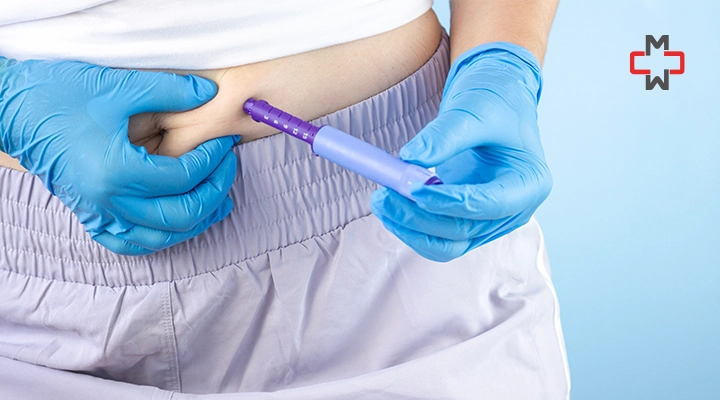
Retatrutide is one of the most talked about weight loss medications currently in development. Like Ozempic, Wegovy, and Zepbound, it works by targeting hormones involved in appetite and blood sugar regulation. The difference is that retatrutide activates three hormone receptors instead of one or two, and early clinical trials suggest that approach could lead to greater weight loss.
If you’re looking for information about Retatrutide for sale, it’s important to understand what the latest research shows and where the medication currently stands in the FDA approval process.
What Is Retatrutide?
Retatrutide is an investigational injectable medication developed by Eli Lilly for the treatment of obesity and overweight. Unlike currently approved medications in this category, it activates three hormone receptors involved in regulating appetite, blood sugar and energy balance.
The medication targets the GLP-1, GIP, and glucagon receptors, which is why it’s often described as a triple hormone receptor agonist. By acting on all three pathways, retatrutide is designed to reduce appetite, slow stomach emptying and increase energy expenditure. Researchers believe this combination may help explain the substantial weight loss seen in clinical trials.
Retatrutide has not been approved by the FDA for any use. It is still being studied in Phase 3 clinical trials and is available only to participants enrolled in approved research studies.
The Latest Research: TRIUMPH-1 Phase 3 Results (May 2026)
In May 2026, Eli Lilly announced topline results from TRIUMPH-1, a Phase 3 clinical trial involving 2,339 adults with obesity or overweight who did not have type 2 diabetes. Participants received a once-weekly injection of either 4 mg, 9 mg, or 12 mg of retatrutide, or a placebo, for 80 weeks.
Weight loss increased with higher doses of the medication. Participants receiving 4 mg lost an average of 19.0% of their body weight, while those taking 9 mg lost 25.9%. The highest dose, 12 mg, produced an average weight loss of 28.3%, compared with 2.2% in the placebo group. That translated to an average weight loss of about 70.3 pounds, and more than 45% of participants on the 12 mg dose lost at least 30% of their body weight.
Among participants who continued treatment and reached their maximum tolerated dose during the extension period, average weight loss approached 30% over a longer follow-up.
The study met both its primary and key secondary endpoints across all three dose groups. Treatment discontinuation due to side effects occurred in 4.1% of participants receiving 4 mg, 6.9% receiving 9 mg, and 11.3% receiving 12 mg, compared with 4.9% in the placebo group.
Other 2026 Retatrutide Trials
Several other Phase 3 studies have also reported encouraging results:
- TRIUMPH-4 (Obesity and Knee Osteoarthritis): Results released in December 2025 showed that participants receiving the 12 mg dose lost an average of 28.7% of their body weight after 68 weeks. The study also evaluated improvements in knee osteoarthritis symptoms.
- TRANSCEND-T2D-1 (Type 2 Diabetes): Results released in March 2026 found that participants with type 2 diabetes who received the 12 mg dose lost an average of 16.8% of their body weight after 40 weeks. The findings were presented at the 2026 American Diabetes Association Scientific Sessions and published in The Lancet.
Additional studies are still underway, including TRIUMPH-2, which focuses on obesity with type 2 diabetes, and TRIUMPH-3, which is evaluating retatrutide in people with obesity and cardiovascular disease. Results from both trials are expected later in 2026.
How Does Retatrutide Compare to Wegovy and Zepbound?
Here’s how the average weight loss reported in clinical trials compares:
| Medication | Main Target(s) | Average Weight Loss* |
| Wegovy (semaglutide) | GLP-1 | ~15% |
| Zepbound (tirzepatide) | GLP-1 + GIP | ~20% |
| Retatrutide | GLP-1 + GIP + glucagon | Up to 28.3% |
*Results come from separate clinical trials and should not be compared directly because each study used different participants, designs, and follow-up periods.
While the numbers suggest that retatrutide may lead to greater weight loss than currently approved medications, only a head-to-head clinical trial can determine how the drugs truly compare. That study is already underway. TRIUMPH-5 is comparing retatrutide directly with tirzepatide.
At the highest dose studied, retatrutide also produced weight loss approaching the range often seen after bariatric surgery, although surgery and medication should not be viewed as equivalent treatments.
Is Retatrutide FDA Approved?
No. As of June 2026, retatrutide has not been approved by the U.S. Food and Drug Administration (FDA) for any use. It is still an investigational triple hormone receptor agonist being evaluated in Phase 3 clinical trials.
Eli Lilly is expected to submit retatrutide for FDA review after completing its Phase 3 program. If the application is accepted and approved, the medication could become available as early as late 2027, although the timeline will ultimately depend on the FDA review process.
For now, retatrutide is available only through approved clinical trials.
Side Effects to Know About
The most common side effects reported in retatrutide clinical trials include:
- Nausea
- Diarrhea
- Constipation
- Vomiting
These side effects are similar to those seen with other GLP-1–based medications. They were more common at higher doses and usually occurred while participants were adjusting to treatment. Most cases were mild to moderate, although some participants stopped treatment because of gastrointestinal side effects.
Is Retatrutide Getting Closer to FDA Approval?
Yes. Retatrutide is one step closer to FDA approval following positive Phase 3 results announced in 2026. Additional Phase 3 studies are expected to report results later this year before the medication moves to the FDA review process.
While no approval date has been confirmed, retatrutide could become available as early as 2027 if it successfully completes the remaining regulatory steps.
Final Thoughts
Retatrutide has shown some of the most promising weight loss results reported in a Phase 3 clinical trial, with average weight loss reaching 28.3% at the highest dose. While those findings have generated significant interest, the medication is still under FDA review and is not yet available by prescription.
For people considering medical weight loss, several FDA-approved treatment options are already available. Retatrutide may become another option in the future, but for now, healthcare decisions should be based on medications that have already been approved for safety and effectiveness.
Editorial Note: This article was reviewed by the research team at Omni Peptides and is based on publicly available clinical trial data and peer-reviewed research available as of June 2026.
Sources
- Eli Lilly and Company. “Lilly’s triple agonist, retatrutide, delivered powerful weight loss in pivotal Phase 3 obesity trial.” PR Newswire, May 21, 2026.
- The Pharmaceutical Journal. “Phase III retatrutide study demonstrates 30% weight loss.” May 22, 2026.
- AJMC. “Retatrutide Achieves Up to 30.3% Average Weight Loss in Phase 3 TRIUMPH-1 Trial.”
- Medscape. “Retatrutide Data Show Dramatic Weight Loss, Other Benefits.” Coverage of the American Diabetes Association 2026 Scientific Sessions.
- Scientific American. “Trial of next-gen weight-loss drug retatrutide brings it one step closer to FDA approval.” May 2026.
- ClinicalTrials.gov. TRIUMPH-1 (NCT05929066) and TRIUMPH-5 (NCT06662383) trial records.
Disclaimer
This blog is for informational & educational purposes only and does not intend to substitute any professional medical advice or consultation. For any health-related concerns, please consult with your physician, or call 911.

-
About The Author
Dr. Syra Hanif M.D.Board Certified Primary Care Physician

Dr. Syra Hanif is a board-certified Primary Care Physician (PCP) dedicated to providing compassionate, patient-centered healthcare.
Read More