


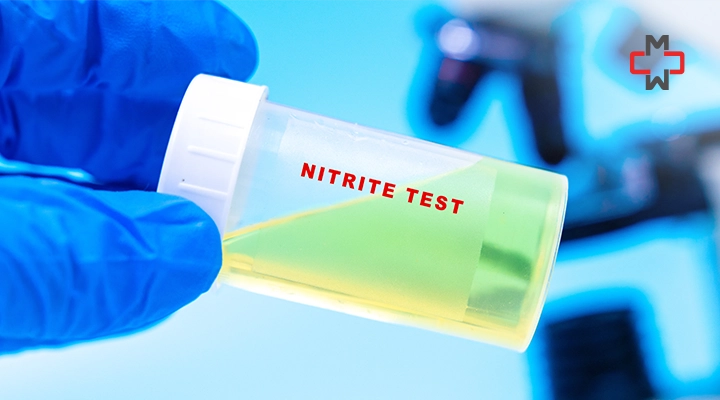
Nitrites in urine usually suggest that certain bacteria may be present in the urinary tract, often because of a urinary tract infection. However, a positive nitrite result does not confirm a UTI by itself, and negative nitrites do not rule one out. Symptoms, leukocytes, urinalysis findings, and sometimes a urine culture must be considered together.
According to Dr. Syra Hanif, M.D., a board-certified primary care physician at Manhattan Medical Arts, urine test results should be interpreted alongside symptoms such as burning urination, urgency, frequent urination, lower abdominal pressure, fever, or back pain. Treatment should address the underlying condition rather than the nitrite result alone.
What Are Nitrites in Urine?
Nitrites are chemicals that may appear in urine when certain bacteria are present in the urinary tract. Healthy urine naturally contains nitrates, which come partly from the foods you eat. Some bacteria can convert those nitrates into nitrites.
MedlinePlus explains that nitrites detected during a urinalysis may be a sign of a UTI. The medical term for nitrites in urine is nitrituria.
A urine dipstick commonly reports nitrites as:
- Positive
- Negative
- Detected
- Not detected
Nitrites are generally not interpreted as a “high” or “low” level in the same way as blood glucose or cholesterol. The important question is whether they were detected and what the rest of the urine test shows.
Nitrites vs Nitrates in Urine
Nitrites and nitrates are related, but they are not the same.
Nitrates are normally present in urine and may come from foods such as vegetables. Their presence alone does not mean you have an infection.
Nitrites may form when urinary bacteria convert nitrates into nitrites. Therefore, a positive nitrite result raises suspicion for bacterial activity in the urinary tract.
| Finding | General meaning |
| Nitrates in urine | Usually normal and partly related to diet |
| Nitrites in urine | May indicate nitrate-converting bacteria |
| Negative nitrites | Does not completely exclude a UTI |
| Positive nitrites | Makes a bacterial UTI more likely but needs clinical interpretation |
Nitrites are also different from other urine-test markers. For example, urobilinogen in urine is mainly related to bilirubin processing and liver or blood-cell conditions, not bacterial UTI testing.
Does Positive Nitrite in Urine Always Mean a UTI?
No. Positive nitrites make a bacterial UTI more likely, but the result is not a complete diagnosis.
A clinician will also consider:
- Urinary symptoms
- Leukocyte esterase
- White blood cells under a microscope
- Bacteria seen in the sample
- Blood in the urine
- Sample collection quality
- Pregnancy status
- Recent antibiotic use
- Urine culture results
A positive nitrite result is more meaningful when you also have classic UTI symptoms. The Manhattan Medical Arts overview of urinary tract infections explains that UTIs can affect the urethra, bladder, ureters, or kidneys.
A urine culture may be needed when symptoms are severe, infections keep returning, pregnancy is involved, initial treatment fails, or the diagnosis is uncertain.
What Symptoms May Occur With Positive Nitrites?
If positive nitrites are related to a bladder infection, you may experience:
- Burning or pain when urinating
- Frequent urination
- A sudden or intense urge to urinate
- Passing only a small amount of urine
- Lower abdominal pressure
- Cloudy urine
- Strong-smelling urine
- Blood or pink discoloration in urine
- Pelvic discomfort
Burning urination is medically called dysuria. Readers experiencing this symptom can review the Manhattan Medical Arts guide to dysuria causes and treatment.
Not everyone with nitrites has noticeable symptoms. Positive nitrites without symptoms require different consideration than nitrites accompanied by pain, fever, or urinary urgency.
Nitrites and Leukocytes in Urine
Nitrites and leukocytes measure different things.
Nitrites suggest that certain bacteria may be converting nitrates in the urine.
Leukocytes are white blood cells. Leukocyte esterase on a dipstick suggests that white blood cells may be present because of infection or inflammation.
| Nitrite result | Leukocyte result | What it may suggest |
| Positive | Positive | A bacterial UTI becomes more likely |
| Positive | Negative | Possible infection, early response, test variation, or false-positive nitrite |
| Negative | Positive | UTI from bacteria that do not produce nitrites, inflammation, STI, stone, or contamination |
| Negative | Negative | A UTI is less likely, but persistent symptoms still need evaluation |
No single combination provides a final diagnosis. Symptoms and, when appropriate, urine culture results matter.
The Manhattan Medical Arts article on the leukocyte esterase urine test explains why white blood cells may appear in urine and how the result is interpreted with other urinalysis findings.
Positive Nitrites but No Leukocytes
Positive nitrites with negative leukocytes can happen for several reasons:
- Bacteria may be present before a strong white blood cell response develops
- The leukocyte test may produce a false-negative result
- The urine may have been diluted
- The nitrite result may be a false positive
- Bacteria may be present without active UTI symptoms
- Test-strip handling may have affected the result
This combination should not be ignored or automatically treated. A clinician may repeat the urinalysis, review symptoms, or order a culture.
If you have burning, urgency, frequent urination, pelvic discomfort, fever, or back pain, arrange a medical evaluation even if the leukocyte result is negative.
Leukocytes but No Nitrites
Leukocytes with negative nitrites do not automatically mean there is no UTI.
MedlinePlus notes that some infection-causing bacteria do not convert nitrates into nitrites. A person can therefore have a UTI despite negative nitrites.
Other possible causes of leukocytes without nitrites include:
- Urethral inflammation
- Sexually transmitted infection
- Kidney or bladder stones
- Vaginal contamination of the sample
- Bladder inflammation
- Certain medications
- Recent urinary procedure
- Infection caused by non-nitrite-producing bacteria
White blood cells without a standard bacterial culture result are sometimes referred to as sterile pyuria. Additional testing may be needed when symptoms continue despite negative nitrites or cultures.
Can You Have a UTI With Negative Nitrites?
Yes. A negative nitrite test cannot rule out a UTI.
Nitrites may remain negative when:
- The bacteria do not convert nitrates into nitrites
- Urine has not remained in the bladder long enough
- You urinate very frequently
- The infection is in an early stage
- The sample is diluted
- Your diet contains limited nitrate
- Vitamin C or other factors interfere with the dipstick
- You recently used antibiotics
This is why clinicians look at the full picture rather than relying on one dipstick square.
If you have typical symptoms but a negative at-home test, an in-office urinalysis and culture may still be appropriate. Manhattan Medical Arts provides UTI testing and treatment in NYC, including evaluation based on symptoms and laboratory findings.
Positive Nitrites With No UTI Symptoms
Positive nitrites without burning, urgency, frequency, fever, or discomfort may represent asymptomatic bacteriuria, meaning bacteria are present in the urine without symptoms of an active UTI.
A person with asymptomatic bacteriuria generally does not “feel” a silent infection because there are no symptoms.
Most healthy nonpregnant adults do not need antibiotics solely because bacteria or nitrites were found without symptoms. The Infectious Diseases Society of America recommends screening and treatment mainly during pregnancy or before certain invasive urologic procedures.
Unnecessary antibiotic treatment can cause side effects and contribute to antibiotic resistance.
However, you should not decide on your own that a result is harmless. Pregnancy, upcoming urinary procedures, recent kidney transplantation, immune status, and other medical factors may change the recommended approach.
What Causes False-Positive Nitrites?
A false-positive result means the dipstick reports nitrites even though they are not truly present or clinically meaningful.
Possible causes include:
- A test strip exposed to air for too long
- An expired or poorly stored test kit
- Urine left standing before testing
- Contamination of the sample
- Incorrect dipstick timing
- Certain urinary pain-relief medications that discolor urine
Tell your healthcare provider about medications or at-home UTI products you have taken before interpreting the result.
What Causes False-Negative Nitrites?
A false-negative result means nitrites are not detected even though a bacterial infection may be present.
Possible reasons include:
- The bacteria do not produce nitrites
- Urine was in the bladder for too little time
- Frequent urination prevented nitrite buildup
- The infection is early
- The sample was highly diluted
- Recent antibiotics reduced bacterial activity
- Dietary nitrate levels were low
- The dipstick was used or read incorrectly
A negative result should not overrule strong symptoms. Urine culture or additional testing may still be needed.
Which Bacteria Commonly Cause Positive Nitrites?
Positive nitrites are commonly associated with nitrate-reducing bacteria. Escherichia coli, commonly called E. coli, is the most frequent cause of UTIs and often produces a positive nitrite result.
Other gram-negative urinary bacteria may also produce nitrites. However, the dipstick cannot tell you which organism is present.
A urine culture can:
- Identify the bacterial organism
- Estimate the amount of bacterial growth
- Help distinguish contamination from infection
- Test which antibiotics may work
- Guide treatment for recurring or resistant infections
Some organisms do not reliably produce nitrites. This is another reason a negative nitrite test cannot exclude infection.
What Does Mixed Urogenital Flora Mean?
A culture report may sometimes say “mixed urogenital flora” instead of identifying one clear bacterial cause.
This often means several organisms grew in the sample, which may happen when bacteria from the skin or genital area enter the collection cup. It may indicate contamination rather than a definite bladder infection.
The Manhattan Medical Arts guide to mixed urogenital flora in urine explains when a repeat clean-catch sample may be needed.
To reduce contamination:
- Wash your hands
- Follow the cleansing instructions
- Begin urinating into the toilet
- Collect the middle portion of the urine stream
- Avoid touching the inside of the cup
- Return the sample promptly
Nitrites in Urine During Pregnancy
Nitrites in urine during pregnancy should be reviewed by a prenatal or healthcare provider, even when there are no symptoms.
Pregnancy increases the importance of detecting bacteria in urine because untreated bacteriuria may increase the risk of kidney infection and pregnancy complications.
A nitrite dipstick can provide a clue, but culture is the established screening test because it can identify the bacteria and guide pregnancy-appropriate treatment.
Contact your provider promptly if you are pregnant and have:
- Positive nitrites
- Burning urination
- Urinary urgency
- Lower abdominal discomfort
- Fever
- Back or side pain
- Nausea or vomiting
- Blood in urine
Patients can discuss urinary symptoms and prenatal concerns through women’s health care in NYC.
Nitrites in Urine in Children
Nitrites in a child’s urine may support a possible bacterial UTI, but children need age-appropriate evaluation and specimen collection.
Children may show symptoms such as:
- Fever without an obvious cause
- Irritability
- Poor feeding
- Vomiting
- Abdominal pain
- Back or side pain
- New bedwetting
- Frequent urination
- Painful urination
- Strong-smelling urine
Collection methods vary by age. A toilet-trained child may provide a clean-catch sample, while infants or younger children may need catheter-based collection to reduce contamination.
Children with fever, vomiting, back pain, poor fluid intake, unusual sleepiness, or signs of dehydration should be evaluated promptly.
How Is a Positive Nitrite Result Confirmed?
A clinician may use several parts of the urinalysis and medical evaluation:
- Symptoms and medical history
- Nitrite dipstick
- Leukocyte esterase
- Urine microscopy
- White and red blood cell counts
- Bacteria seen in the sample
- Urine culture
- Antibiotic susceptibility testing
- Pregnancy testing when relevant
- Imaging if stones or obstruction are suspected
A dipstick provides rapid screening. A culture takes longer but offers more detailed information about the organism and possible antibiotic options.
Not every uncomplicated UTI requires the same testing plan. The decision depends on age, sex, pregnancy, symptoms, infection history, medical conditions, and treatment response.
Can At-Home UTI Test Strips Be Trusted?
At-home UTI strips may screen for nitrites and leukocytes, but they cannot confirm the diagnosis or identify the responsible bacteria.
A positive result may support seeking care, especially if symptoms are present. A negative result does not guarantee that there is no infection.
At-home strips may be affected by:
- Incorrect collection
- Reading the strip too early or too late
- Expired strips
- Medication or urine color
- Frequent urination
- Diluted urine
- Bacteria that do not create nitrites
Do not use an at-home strip as the only reason to start leftover antibiotics or delay care for severe symptoms.
Can Kidney Stones Cause Nitrites in Urine?
Kidney stones do not directly create nitrites. A stone may cause blood, crystals, pain, urinary blockage, or inflammation.
Nitrites would usually suggest that bacteria may also be present. A blocked urinary tract can increase the seriousness of an infection because urine may not drain properly.
Symptoms that may point toward a kidney stone include:
- Severe wave-like side or back pain
- Pain moving toward the groin
- Nausea or vomiting
- Blood in urine
- Restlessness
- Urinary urgency
The Manhattan Medical Arts comparison of kidney stones vs UTI explains how the symptoms may overlap.
A possible infection with an obstructing stone requires urgent medical attention.
Can Nitrites in Urine Mean Cancer?
Nitrites are not a cancer marker. They primarily suggest bacterial conversion of nitrates in the urinary tract.
A nitrite-positive result by itself does not mean bladder, kidney, or another cancer.
However, blood in the urine, unexplained weight loss, persistent urinary changes, recurrent infections, or symptoms that do not improve should be evaluated separately. These findings can have many causes, including infection, stones, inflammation, and less commonly cancer.
Do not assume that persistent symptoms are explained by nitrites alone.
How Are Nitrites in Urine Treated?
Nitrites themselves are not treated. The underlying cause determines whether treatment is needed.
If symptoms and testing support a bacterial UTI, treatment may include an appropriate antibiotic. The medication choice can depend on:
- Urine culture
- Antibiotic sensitivity
- Pregnancy
- Kidney function
- Allergies
- Infection location
- Previous resistant bacteria
- Current medications
Not everyone with positive nitrites requires antibiotics. Asymptomatic bacteriuria is often not treated in nonpregnant adults, while pregnancy and certain urinary procedures are important exceptions.
Avoid:
- Using leftover antibiotics
- Sharing antibiotics
- Stopping medication early
- Taking repeated antibiotics without confirmation
- Assuming urinary pain-relief medicine cures infection
Urinary pain-relief products may temporarily reduce discomfort, but they do not kill bacteria.
Can You Get Rid of Nitrites Naturally?
There is no proven home remedy that directly “flushes out” nitrites.
Drinking enough fluid may help prevent dehydration and support normal urination, but water cannot reliably cure a bacterial UTI. Cranberry products, supplements, and dietary remedies should not replace medical evaluation when an infection is suspected.
The nitrites usually disappear when the bacteria causing them are cleared or when a false-positive result is corrected.
Seek proper diagnosis rather than trying to lower the dipstick result itself.
When Should You See a Doctor?
Arrange medical care if you have positive nitrites with:
- Burning urination
- Frequent or urgent urination
- Lower abdominal pain
- Cloudy or strong-smelling urine
- Blood in urine
- Symptoms lasting more than a day or two
- Recurrent UTIs
- Pregnancy
- Diabetes
- A weakened immune system
- A urinary catheter
- Recent urinary surgery
- Symptoms in a child
You should also speak with a provider if nitrites remain positive without a clear explanation.
A primary care evaluation can help interpret abnormal urinalysis results. Mild symptoms or laboratory-result questions may initially be discussed through an online doctor visit, although an in-person urine sample may still be required.
When Positive Nitrites Need Urgent Care
Seek urgent medical care if positive nitrites or urinary symptoms occur with:
- Fever or chills
- Back, side, or groin pain
- Repeated vomiting
- Severe weakness
- Confusion
- Rapid breathing or heartbeat
- Inability to keep fluids down
- Blood or clots in urine
- Pregnancy with fever or back pain
- Symptoms in an infant
- Severe pain with possible kidney stone
- Inability to urinate
A kidney infection may develop when bacteria move from the bladder into one or both kidneys. Prompt treatment helps reduce the risk of serious complications.
For urgent but non-life-threatening urinary symptoms, Manhattan Medical Arts offers same-day walk-in doctor appointments.
How Manhattan Medical Arts Can Help
Manhattan Medical Arts evaluates positive nitrites, UTI symptoms, abnormal urine tests, and recurring urinary concerns for patients in Manhattan, Forest Hills, and across NYC.
Care may include:
- Review of urinalysis results
- Clean-catch urine collection
- Urine culture
- Antibiotic sensitivity testing
- Evaluation of urinary symptoms
- Pregnancy-related guidance
- Assessment for kidney infection
- Comparison of UTI and kidney stone symptoms
- Treatment based on the clinical findings
Dr. Syra Hanif, M.D. and the medical team can help determine whether nitrites represent a symptomatic UTI, asymptomatic bacteriuria, a contaminated sample, or a result requiring additional testing.
Frequently Asked Questions
What causes positive nitrites in urine?
Positive nitrites usually form when certain bacteria convert naturally occurring urinary nitrates into nitrites. This commonly happens with a bacterial UTI.
Can you have a UTI without nitrites?
Yes. Some bacteria do not produce nitrites, and frequent or diluted urination may also cause a negative result despite infection.
What do nitrites and leukocytes together mean?
When both are positive, a bacterial UTI becomes more likely. Symptoms and urine culture may still be needed to confirm the diagnosis.
What does positive leukocytes but negative nitrites mean?
It may indicate a UTI caused by bacteria that do not produce nitrites, inflammation, an STI, a stone, or contamination.
Can nitrites be positive without a UTI?
False-positive tests and asymptomatic bacteriuria are possible. A positive result should be interpreted with symptoms and other test findings.
What does a silent UTI feel like?
True asymptomatic bacteriuria causes no UTI symptoms. Bacteria are found during testing even though the person feels normal.
Should I worry about nitrites during pregnancy?
Nitrites during pregnancy should be reviewed by a prenatal provider. A urine culture may be needed because bacteria without symptoms can still matter during pregnancy.
Can kidney stones cause positive nitrites?
Stones do not directly produce nitrites. Positive nitrites may indicate that a bacterial infection is also present.
Can nitrites in urine mean cancer?
No. Nitrites are not a cancer marker. They are mainly associated with bacterial activity in the urinary tract.
What is the next step after a positive nitrite result?
Review your symptoms with a healthcare provider. Additional urinalysis, microscopy, or a urine culture may be recommended.
Can I remove nitrites naturally?
Nitrites cannot be reliably flushed out with a home remedy. Treatment, when needed, targets the bacteria or underlying condition.
When are nitrites in urine an emergency?
Seek urgent care for fever, chills, back or side pain, vomiting, confusion, severe weakness, pregnancy with systemic symptoms, blood in urine, or inability to urinate.
Final Thoughts
Nitrites in urine often suggest that certain bacteria may be present and that a bacterial UTI is possible. However, nitrites do not provide a complete diagnosis. Positive results should be interpreted with symptoms, leukocytes, other urinalysis findings, and sometimes a urine culture.
A negative nitrite result does not rule out a UTI, and positive nitrites without symptoms do not always require antibiotics. Pregnancy, children, kidney infection warning signs, recurring UTIs, and abnormal results without a clear explanation require individualized medical evaluation.
Disclaimer
This blog is for informational & educational purposes only and does not intend to substitute any professional medical advice or consultation. For any health-related concerns, please consult with your physician, or call 911.

-
About The Author
Dr. Syra Hanif M.D.Board Certified Primary Care Physician

Dr. Syra Hanif is a board-certified Primary Care Physician (PCP) dedicated to providing compassionate, patient-centered healthcare.
Read More