


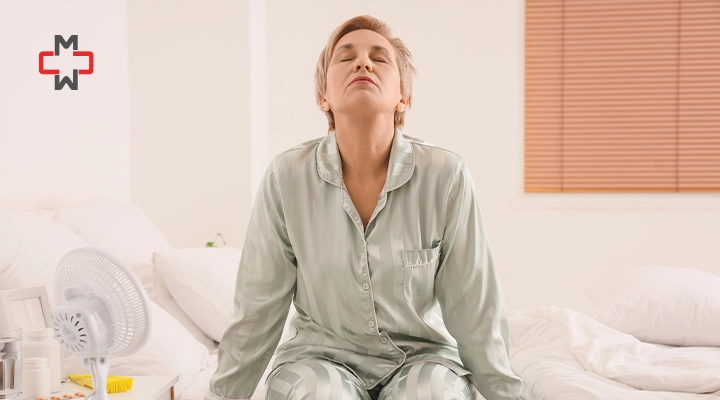
If your libido has disappeared, your energy is flat despite adequate sleep, and your muscle tone has diminished despite consistent exercise — and if estrogen therapy alone has not fully restored how you feel — there is a very good chance the missing piece is testosterone.
Testosterone is the most widely overlooked hormone in women’s health. Most people think of it as a male hormone. It is not. Women produce testosterone throughout their lives — and before menopause, they actually produce more testosterone than estrogen by total quantity. It is made in the ovaries and adrenal glands, it circulates in the bloodstream, and it acts on receptors throughout the brain, muscle tissue, bone, and genitourinary system.
Testosterone levels in women begin declining gradually from the late 30s onward — earlier than estrogen. By the time a woman reaches natural menopause, her testosterone levels may be 50% lower than they were at their peak. In surgical menopause (following bilateral oophorectomy), testosterone drops to near-zero within days of surgery, often producing more immediate and severe effects on libido, energy, and mood than the estrogen loss itself.
Despite this, testosterone is almost never included in standard hormonal blood panels for women. It is rarely discussed in OB/GYN or general practice consultations. And when women raise concerns about libido, fatigue, or reduced drive, they are far more likely to be offered antidepressants or referred to a therapist than to have their testosterone measured.
At Manhattan Medical Arts, Dr. Syra Hanif, M.D. assesses testosterone as a standard component of comprehensive menopause evaluation. This post explains what testosterone actually does for women, how to recognise its deficiency, and what evidence-based treatment looks like in practice.
What Testosterone Actually Does for Women
Estrogen gets nearly all the attention in women’s hormonal health conversations. But for libido, drive, energy, and several aspects of physical performance, testosterone is the primary driver — and its deficiency produces a distinct symptom cluster that estrogen replacement alone cannot address.
Libido and Sexual Function
Testosterone is the central driver of libido in women — more so than estrogen. It acts on androgen receptors in the brain’s limbic system, particularly the hypothalamus, which governs sexual motivation and arousal. It also acts on androgen receptors in the clitoris and vaginal tissue, influencing clitoral sensitivity, engorgement, and orgasm intensity. Women with low testosterone frequently describe not just reduced desire but a flattening of sexual sensation — a reduced capacity for arousal and a diminished intensity of orgasm that feels qualitatively different from psychological disinterest.
Energy, Drive, and Motivation
Testosterone plays a central role in the neurobiology of motivation, reward, and drive. It acts on dopaminergic pathways in the brain’s reward system, supporting the sense of purpose, initiative, and goal-directed energy that characterises what many women describe as feeling “like themselves.” Women with low testosterone frequently describe a grey, flat quality to their energy — not the anxious exhaustion of cortisol dysregulation or the heavy fatigue of anaemia, but a motivational flatness that does not improve with rest and does not respond to caffeine.
Muscle Mass and Physical Performance
Testosterone is anabolic: it promotes muscle protein synthesis and supports the maintenance of lean body mass. In women, this effect is subtler than in men because female testosterone levels are much lower, but it is clinically meaningful. Women with low testosterone lose muscle mass faster than expected for their age, find it harder to build or maintain strength despite resistance training, and experience a body composition shift toward fat even when diet and exercise habits have not changed. This interacts directly with the metabolic shifts of menopause to compound visceral fat accumulation and insulin resistance.
Cognitive Function and Mood
Testosterone has established neuroprotective properties and acts on androgen receptors throughout the prefrontal cortex, hippocampus, and amygdala. Women with low testosterone frequently report cognitive symptoms that overlap with estrogen-related brain fog but have a distinct quality: reduced sharpness, slower verbal processing, reduced confidence, and a diminished sense of cognitive clarity. Mood effects include low-grade irritability, reduced emotional resilience, and a loss of the quality some women describe as “spark” — a flattened affect that is not clinical depression but is a meaningful reduction in psychological wellbeing.
Bone Density
Testosterone contributes to bone density maintenance through direct action on androgen receptors in bone and through its aromatisation to estradiol in peripheral tissue. Women with very low testosterone — particularly those with surgical menopause or POI — have additional bone loss risk on top of estrogen deficiency, and testosterone replacement contributes to skeletal protection alongside estrogen and the bone health supplementation protocol.
| >50%
Testosterone declines by from peak to natural menopause |
~0
After surgical menopause oophorectomy drops T to near-zero |
Rarely
Tested in standard panels despite producing real, distinct symptoms |
Signs of Low Testosterone in Women
The symptoms of low testosterone in women are real, common, and frequently misattributed. The following are the most clinically significant indicators that testosterone deficiency may be contributing to how you feel:
| Low or absent libido unresponsive to context | Reduced sexual desire that does not improve with better mood, reduced stress, or relationship effort. Specifically: a loss of spontaneous desire (wanting sex without a specific trigger) as opposed to responsive desire only. Women may still respond to sexual initiation but notice the internal drive has diminished or disappeared. |
| Reduced arousal and orgasm intensity | Decreased clitoral sensitivity, reduced engorgement, longer time to arousal, and diminished orgasm intensity or frequency. This is a direct androgen receptor effect in genital tissue, distinct from the lubrication issues of estrogen deficiency (though both can coexist). |
| Persistent fatigue despite adequate sleep | A specific motivational flatness — not sleepiness or the fragmented fatigue of sleep deprivation, but a low baseline energy and drive that does not respond to rest. Women describe feeling as though their internal engine is running at lower capacity. |
| Muscle weakness despite consistent exercise | Difficulty building or maintaining muscle tone despite regular resistance training. A progressive shift in body composition toward fat, particularly in the abdominal region, despite unchanged diet and exercise habits. |
| Reduced motivation, drive, and confidence | A flattening of initiative and goal-directedness. Reduced enthusiasm for activities previously enjoyed. A sense that cognitive sharpness and emotional resilience have diminished. Not clinical depression, but a meaningful reduction in baseline psychological vitality. |
| Cognitive changes — sharpness and processing | Slower verbal processing, reduced mental clarity, diminished confidence in cognitive performance. Often described as “not feeling sharp” in a way that is distinct from the word-finding and memory issues of estrogen-related brain fog. |
| 💡 Clinical note from Dr. Syra Hanif, M.D.:
Low testosterone in women is not a rare finding. In perimenopausal and postmenopausal women, particularly after surgical menopause, low testosterone is extremely common — and it is consistently underdiagnosed because it is consistently undertested. If you recognise three or more of the above symptom clusters, a testosterone level should be part of your hormonal evaluation. At Manhattan Medical Arts, it always is. |
FDA Status, International Guidelines, and the Evidence Base
One of the most common questions women ask about testosterone therapy is: “Is it approved?” The honest answer requires some nuance, because the regulatory status and the evidence base are different things.
The FDA Approval Gap — A Regulatory Issue, Not a Safety Signal
There is no FDA-approved testosterone product for women in the United States. This is a regulatory gap, not a reflection of the evidence. The reasons are largely commercial: pharmaceutical companies have not pursued FDA approval for women’s testosterone products because the anticipated market did not, until recently, justify the cost of the approval process. Male testosterone products are used off-label for women at female-appropriate doses — a standard, well-established clinical practice. Compounded testosterone preparations (gels, creams, pellets) are prescribed by physicians specifically for women at the doses appropriate for female physiology.
The absence of FDA approval does not mean testosterone therapy for women is experimental, unsafe, or unsupported. It means the regulatory pathway has not been pursued commercially. The same medication, the same molecule, the same evidence — just no manufacturer-funded approval process.
International Guidelines Support Testosterone for HSDD in Menopausal Women
Multiple major international endocrine and menopause societies have reviewed the evidence and issued clinical recommendations supporting testosterone therapy for hypoactive sexual desire disorder (HSDD) in menopausal women:
- The British Menopause Society (BMS) recommends testosterone for menopausal women with low libido that has not responded adequately to estrogen therapy alone
- The Endocrine Society clinical practice guidelines support testosterone therapy for postmenopausal women with HSDD
- The International Society for Sexual Medicine (ISSM) global consensus statement supports testosterone for HSDD in postmenopausal women after ruling out other causes
- The North American Menopause Society (NAMS) acknowledges testosterone as a reasonable treatment for HSDD in menopausal women with the caveat of the FDA approval gap
The evidence for libido and sexual function improvement is the strongest in the testosterone literature for women — consistent across multiple randomised controlled trials. Emerging evidence for metabolic benefits (improved insulin sensitivity, lean mass preservation), cognitive function, and bone density is growing but less mature.
| 📚 What is HSDD?
Hypoactive Sexual Desire Disorder (HSDD) is the clinical term for persistent, distressing low sexual desire that is not explained by a relationship issue, another medical condition, or a medication side effect. It is the most commonly reported sexual dysfunction in menopausal women and has testosterone deficiency as a primary hormonal driver in many cases. HSDD is a real clinical diagnosis — not a lifestyle complaint, not an inevitable consequence of age, and not something women should simply accept. |
What We Prescribe at Manhattan Medical Arts
Testosterone therapy for women is not the same as testosterone therapy for men. The doses, the formulations, and the monitoring targets are completely different — and using male-calibrated products or protocols in women is a clinical error that produces both inadequate treatment and unwanted side effects.
Female-Appropriate Doses
The therapeutic dose of testosterone for women is approximately 10 to 20 times lower than the dose used for men. A man on testosterone replacement therapy receives 50–100 mg per day. A woman on testosterone therapy receives 0.1–2 mg per day. This is not a minor distinction — it is the difference between treatment and virilisation. At the correct female dose, masculinising side effects are extremely rare, typically limited to mild skin oiliness or slight increase in facial hair growth, and fully reversible with dose adjustment.
Formulations Available at Manhattan Medical Arts
| Formulation | How Used | Notes for Women |
| Compounded testosterone gel (0.5–2 mg/day) | Applied daily to inner thigh, labia, or forearm — site-specific application aids local tissue as well as systemic absorption | Most commonly prescribed female formulation. Precise dose titration. Easy to adjust. Preferred for most women beginning therapy. |
| Compounded testosterone cream (0.5–2 mg/day) | Applied to inner forearm, inner wrist, or genitourinary tissue | Alternative to gel. Some women prefer cream texture. Vaginal or vulvar application may benefit local tissue directly. |
| Testosterone pellets (75–150 mg every 3–5 months) | Subcutaneous insertion under local anaesthetic — typically flank or buttock | Provides consistent levels for 3–5 months without daily application. No FDA approval for women. Cash-pay only. Preferred by women who want set-and-forget convenience. |
Monitoring Protocol
Safe testosterone therapy requires monitoring. At Manhattan Medical Arts, Dr. Syra Hanif, M.D. measures and tracks the following:
- Serum total testosterone: measured 3–4 weeks after initiation or dose change; target is the low-to-mid normal premenopausal female range (approximately 15–70 ng/dL depending on lab reference)
- Free testosterone (calculated or measured): total testosterone can be misleading if SHBG is elevated, as high SHBG renders testosterone biologically unavailable
- SHBG (sex hormone binding globulin): high SHBG is common with oral estrogen and certain medical conditions; it reduces the biologically active fraction of testosterone and may require dose adjustment or route-of-estrogen-delivery change
- Haematocrit: testosterone mildly stimulates red blood cell production; monitored at baseline and annually
- Symptom reassessment at 3 months: libido, energy, mood, and muscle tone are evaluated clinically alongside laboratory values
| ✅ Target range for women’s testosterone therapy at Manhattan Medical Arts:
We target the low-to-normal premenopausal female reference range — not male ranges, not supraphysiological levels. Levels are checked 3–4 weeks after initiation and at each 3-month follow-up. Dose adjustment is made based on both laboratory values and clinical response. If any early signs of androgen excess appear (skin oiliness, acne, unwanted hair growth), dose is reduced immediately. These effects are reversible. |
Self-Pay Context for Testosterone Therapy
Testosterone therapy for women is not covered by insurance in the United States. Because there is no FDA-approved female testosterone product, insurance companies do not reimburse for it — regardless of clinical indication.
At Manhattan Medical Arts, testosterone therapy is a self-pay service. This includes:
- The initial consultation and hormonal blood panel (total testosterone, free testosterone, SHBG, and a full menopause hormone panel)
- Compounded testosterone gel or cream prescriptions — obtained through a compounding pharmacy; costs vary but are typically $40–$80 per month
- Testosterone pellet insertion procedures — procedure fee applies; pellets typically last 3–5 months
- Follow-up consultations and monitoring blood tests at 3-month intervals
| Payment Methods at Manhattan Medical Arts
We accept all major credit and debit cards · HSA (Health Savings Account) · FSA (Flexible Spending Account) · Zelle · ACH bank transfer. An itemized superbill is provided after every visit for potential out-of-network submission. Note: Compounding pharmacy costs are separate from consultation fees and are paid directly to the pharmacy. Superbill can be submitted for pharmacy costs to FSA/HSA administrators. |
Book Your Testosterone Evaluation
If you are experiencing low libido, flat energy, reduced muscle tone, or motivational changes that have not been fully explained or addressed by your current care — and particularly if you have never had your testosterone measured — a comprehensive hormonal evaluation at Manhattan Medical Arts is the appropriate next step.
Dr. Syra Hanif, M.D. assesses testosterone as a standard component of every menopause consultation. Same-day and walk-in appointments are available.
Frequently Asked Questions
Will testosterone therapy make me grow facial hair or sound masculine?
No — not at female-appropriate doses. When testosterone is prescribed at the doses used for women (0.1–2 mg per day, approximately 10–20 times lower than male doses), masculinising side effects are extremely rare. The most common side effect, if doses are not monitored carefully, is mild skin oiliness or a very slight increase in facial hair — both of which are fully reversible with dose reduction. At Manhattan Medical Arts, serum testosterone levels are monitored to ensure they remain in the normal female premenopausal range. You will not develop a deeper voice, body hair growth, or other masculinising changes from correctly dosed women's testosterone therapy.
How do I know if I have low testosterone?
A serum testosterone level — specifically total testosterone combined with SHBG (sex hormone binding globulin) to calculate free testosterone — is the starting point. Total testosterone alone can be misleading: if SHBG is elevated (which is common with oral estrogen and certain medical conditions), total testosterone may appear normal while biologically available testosterone is actually very low. At Manhattan Medical Arts, Dr. Syra Hanif, M.D. measures total testosterone, free testosterone, and SHBG together, and interprets them in the context of your symptoms. Clinical assessment of libido, energy, muscle tone, and motivation is equally important — symptoms and lab values are both necessary for accurate diagnosis.
Can I take testosterone if I'm also on estrogen therapy?
Yes — and this combination is standard practice in comprehensive menopause management. Estrogen and testosterone address different symptom clusters and have complementary mechanisms: estrogen primarily addresses vasomotor symptoms, vaginal tissue health, cardiovascular and bone protection, and sleep; testosterone primarily addresses libido, energy, drive, and muscle mass. Many women find that estrogen therapy alone improves their quality of life substantially but does not fully restore libido or motivation — adding testosterone addresses those remaining gaps. The two therapies do not interfere with each other and are routinely co-prescribed at Manhattan Medical Arts.
How long does it take to notice a difference from testosterone therapy?
Most women notice improvement in energy and motivation within 3–6 weeks of initiating testosterone therapy. Libido improvement typically follows at 6–12 weeks — it is often the last symptom to improve and the one that requires the most patience. Muscle tone changes require consistent resistance training alongside testosterone and typically become noticeable over 3–6 months. At the 3-month follow-up consultation, Dr. Syra Hanif, M.D. assesses both laboratory levels and clinical response, and adjusts the dose if the response has been partial.
Are testosterone pellets better than gel or cream?
Neither is universally superior — the best formulation depends on individual preference, lifestyle, and response. Testosterone gel and cream offer precise dose titration, easy adjustment, and no procedural requirement. Testosterone pellets offer consistent serum levels for 3–5 months without daily application — preferred by women who find daily application inconvenient. The trade-off is that pellets cannot be adjusted once inserted — if levels run too high or too low, you wait for the pellet to be metabolised before adjusting. For most women beginning testosterone therapy, Dr. Syra Hanif, M.D. recommends starting with compounded gel or cream to establish the correct dose before considering pellets.
Is testosterone therapy safe long-term for women?
The evidence for long-term safety of testosterone therapy in women at physiological doses is reassuring. Multiple studies and systematic reviews have not found a significant increase in breast cancer risk, cardiovascular events, or other serious adverse outcomes at female-appropriate doses. The critical qualifiers are: female-appropriate doses (not male doses), regular serum monitoring to avoid supraphysiological levels, and appropriate patient selection. Long-term safety data for women is less extensive than for estrogen because testosterone has been studied and prescribed for women for far fewer years — but the current evidence does not support the concern that appropriately dosed testosterone therapy carries significant long-term risk. Dr. Syra Hanif, M.D. reviews the evidence with each patient and provides individualised risk-benefit assessment.
| 📞 Call or Walk In
646-454-9000 Same-day & walk-in available |
🏥 Manhattan Medical Arts
Dr. Syra Hanif, M.D. Self-pay · HSA/FSA accepted · Superbill provided |

-
About The Author
Dr. Syra Hanif M.D.Board Certified Primary Care Physician

Dr. Syra Hanif is a board-certified Primary Care Physician (PCP) dedicated to providing compassionate, patient-centered healthcare.
Read More